Climate-threatened Fijian utopia rejects calls to relocate / Photo: © AFP

As the sun sets over Fiji's tiny Serua Island, its climate-threatened inhabitants soak in one of the reasons they have rejected attempts to relocate their village -- the "$100 million views".
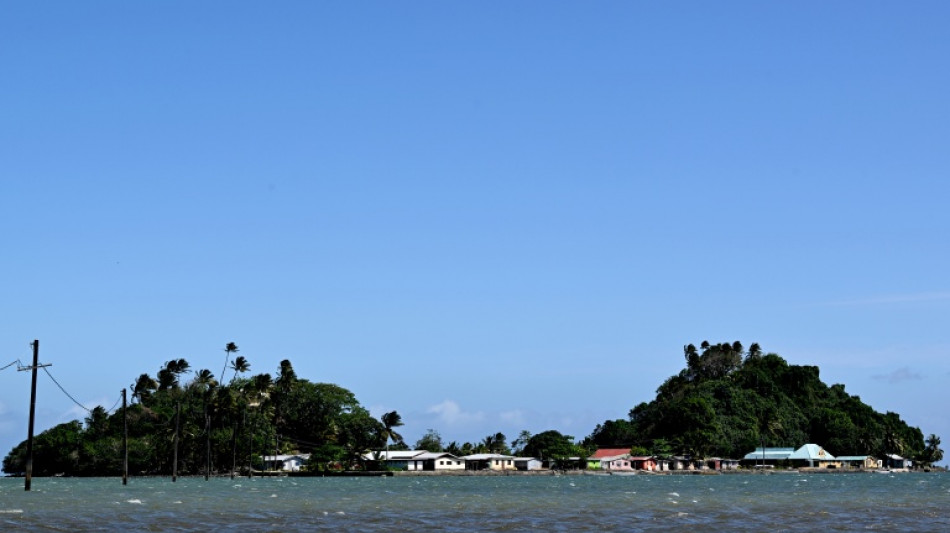
The island looks like a utopia from the mainland, two steep palm-covered knolls sandwiching its low-lying centre, flanked by coral reefs and rich fishing grounds.
But it is on the island itself that the risk from rising seas becomes clearer, with a concrete sea wall providing the only defence against waves that are already swamping homes.
"The stronger the air pressure, the higher the waves. So the waves wash through inside the village," Serua Island resident Avenai Ranuku told AFP.
Dozens of homes are in harms way when cyclones hit Fiji, as are vegetable crops and graves.
Water laps at the feet of concrete piles where homes and a hospital once stood on the island's eastern end, and two homes were also moved from the western side where land has been washed away.
Despite the risks, most residents say they would rather strengthen the island's defences than abandon their ancestral home.
Ranuku remembers when category five cyclone Winston hit as a child and the island's population moved up one of the island's peaks to take shelter.
"Terrifying," Ranuku said of that night.
"All of the villagers, when the chief mention it, we go up. No one left behind. We help everyone, carry everything from the house, food. This is our evacuation plan."
Safe on higher ground, Ranuku could hear "waves going around, and the roof of the houses being washed away".
From that same haven on the hill, Ranuku explained why the threat of cyclones and sea level rise doesn't deter people from living on the island.
"We love this island, you know. Fresh air, go out fishing every day, that's why they don't want to leave.
"Many people used to say, they go to that house on the hill to see the sunset, it's a $100 million view."
- Constantly threatened -
Serua Village worked with Habitat for Humanity in 2025 to write a detailed disaster risk reduction plan, as most of the population rejected calls for it to relocate.
Instead residents wanted to protect their ancestral home and the culture linked to it.
The report found nearly 20 percent of homes on the island were in critical condition, and just three houses were strong enough to withstand a cyclone.
"Serua Island experiences more frequent seawall overtopping during high tides and king tides, saline intrusion affecting soil fertility, and standing water after rainfall, elevating health risks," the report said.
"The assessment shows there is a lack of natural form of wave breakers on Serua Island, and it is constantly threatened by sea level rise and cyclones.
"More than 50 percent of houses have a combination of unstable foundations and roofs, and weak joints, walls, and bracing, making these homes most vulnerable to cyclones and severe weather events."
On receiving the report, the village wasted no time in working to strengthen its resilience.
During AFP's visit in October, dozens of workers were renovating homes along the northern coastline.
Flimsy walls and corrugated iron roofing were being removed and taken by boat to the mainland.
Some homes had already been raised to mitigate flood risk, and others would soon follow.
The report also recommended improving access to the island by building a more robust path.
During low tide, it is possible to walk the 750 metres to the island, guided by a string of power lines protruding from the sea floor.
But at high tide the only access is by boat, and even then the report said work is needed to make docking on the island safer and easier.
It is work Ranuku said his village is committed to.
"Why would we want to leave?", he said, looking across the water to Fiji's Coral Coast.
"We have $100 million views."
M.Lozano--LGdM