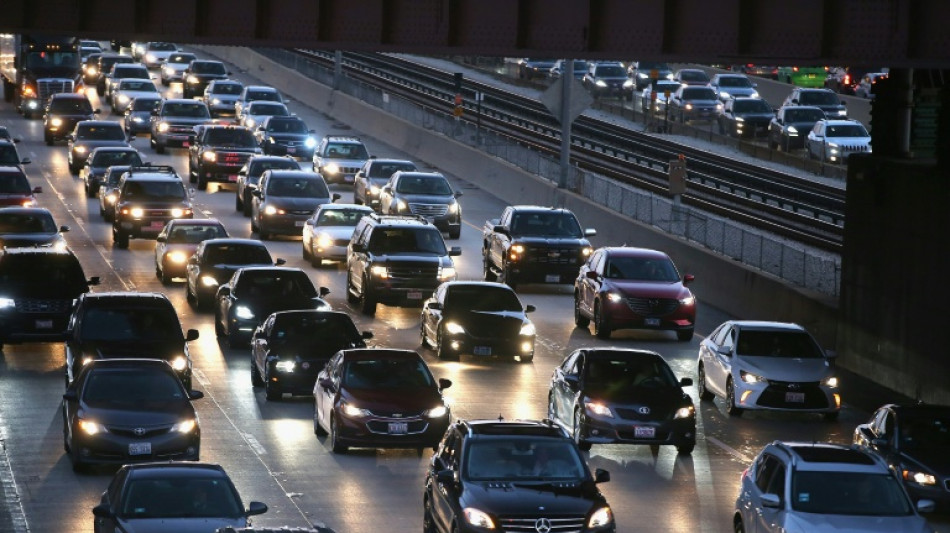
Trump admin finalizes reversal of US fuel economy standards / Photo: © GETTY IMAGES NORTH AMERICA/AFP/File

President Donald Trump's administration on Monday finalized its rollback of US fuel economy standards that were meant to spur the transition towards electric vehicles and reduce planet-warming emissions from transport, the country's biggest source of greenhouse gases.
The new standards require a fleet average fuel economy of 34.9 miles per gallon (6.74 liters per 100 kilometers) by model year 2031 -- a figure that the rule's own data shows was already achieved two years ago.
"Thanks to President Trump's leadership, we have finally ended the illegal mandate that forced automakers to produce more expensive electric vehicles that American families didn't want," Transportation Secretary Sean Duffy said in a statement.
The statement said the rule change would reduce the average cost of new vehicles by $1,300, save $138 billion over the next five years, and "prevent more than 300,000 serious injuries and save 1,900 lives by encouraging new car sales."
The change was hailed by Alliance for Automotive Innovation, a lobby group that includes Detroit and international carmakers.
"The standards finalized under the previous administration effectively required a switchover to electric vehicles that was out of step with market realities and customer demand. Today's final rule is an appropriate course correction," said John Bozzella, the group's president and CEO.
- EV incentive rollback -
It is the latest step under Trump and his Republican allies to undo incentives for automakers to produce electric cars, at a time when China is dominating the global market.
Earlier this year, the administration ended federal limits on greenhouse gas emissions from cars, while Congress last year repealed EV tax credits, and blocked California from banning the sale of new gasoline cars from 2035.
The rule revises the Corporate Average Fuel Economy (CAFE) standards, created in 1975 in response to the Arab oil embargo, which require vehicles to achieve the "maximum feasible" mileage per gallon.
The rule change was partly symbolic: Biden-era updates to CAFE had been rendered toothless after the Republicans' "One Big Beautiful Bill Act" of 2025 zeroed out the penalties for automakers failing to meet the standards.
But because the new rule retroactively lowers standards to model year 2022, automakers will earn credits for having beaten the weaker targets over the past four years -- a cushion should a future government move to increase standards.
Environmental critics hit out.
"The standards that Trump is gutting represent the biggest single step any nation has ever taken to cut gas consumption, save consumers money at the pump and cut global warming pollution," Dan Becker, director of the Center for Biological Diversity's Safe Climate Transport Campaign, told AFP.
The nonprofit has vowed to sue, arguing the administration's action unlawfully excludes the feasibility of clean technology and the millions of fuel-efficient cars already on the road.
The United States is the world's second-biggest emitter of planet-heating gases.
Biden's administration had set a target of 50.4 mpg by the year 2031, which it calculated would have saved 64 billion gallons of gas through the year 2050 and, even before the present price hike caused by the war against Iran, delivered $35 billion in savings to consumers.
S.Olivares--LGdM