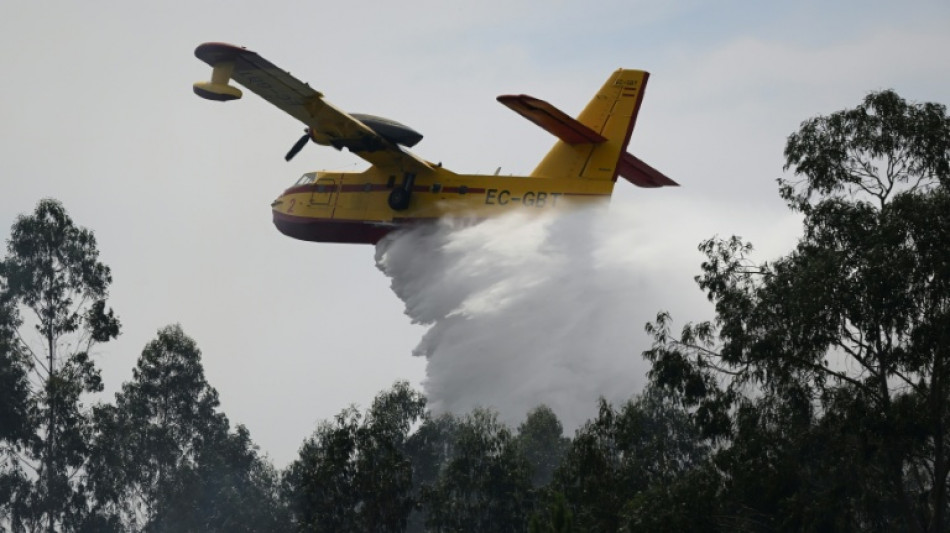
Thousands flee new wave of European wildfires / Photo: © AFP

Wildfires across southern Europe forced thousands of people to flee their homes and prompted authorities to ban spectators from Monday's Tour de France stage that was threatened by one inferno.
Hundreds of firefighters are battling blazes that have devastated more than 20,000 hectares (50,000 acres) of land -- an area nearly three times the size of Manhattan -- across Portugal, Spain, France, Greece and other countries.
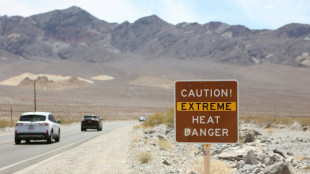
The fires are spreading as temperatures rise again -- already reaching 43C in Spain -- in a continent still scarred by the aftermath of heatwaves in May and June that have been blamed for thousands of deaths.
Scientists agree that climate change driven by humans burning fossil fuels is increasing the risk and severity of heatwaves and other extreme weather phenomena.
Some 10,500 people were told to evacuate their homes near Perpignan in southwestern France as firefighters battled a blaze in the Pyrenees that has devoured more than 4,600 hectares, authorities said.
"The fire came within 300 metres of the houses. We were taken aback by how fast it spread, it was staggering -- bordering on panic," said Patrice, a 53-year-old resident of the village of Trevillach, who did not give his surname.
"We started seeing smoke around 10:30 pm, then it kept coming closer and closer. Someone from the town hall knocked on our door around 1:00 am to tell us to leave," said Charlotte Pignol.
"The smell of smoke was overwhelming," added the 30-year-old.
- Cycle fans sidelined -
Authorities said Monday's third stage of the Tour de France cycle race through the Pyrenees would take place without the thousands of spectators who normally line the route.
The 196-kilometer (122-mile) stage sees the race cross the border from Spain into France. But only riders and their team vehicles will be allowed on the route.
Regional prefect Pierre Regnault de la Mothe told reporters: "I regret having to say this, it will be, in France at least, a stage of the Tour de France without spectators."
Three hundred French firefighters struggled to control another fire in a mountainous district of the southeastern Drome department.
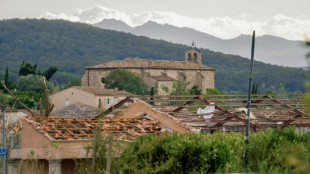
In Greece, flames set off by a forest fire tore through two factories in Thessaloniki in the north of the country, forcing authorities to evacuate the surrounding area and to warn households to keep their windows closed.
A fire that threatened the tourist beaches of the Costa Brava in northeastern Spain burned more than 2,200 hectares in two days and was still being fought Monday.
Rising temperatures in Spain fuelled fears of more blazes. The thermometer reached 43C in Andalusia and Extremadura on Sunday.
- Climate change impact -
In Portugal, emergency services said they had controlled a wildfire that devastated some 13,000 hectares of forest and scrub land in a northern district. Four Portuguese regions remained on a heat alert Monday however.
Elsewhere, major fires also destroyed hundreds of hectares of forest, vineyards and scrub land on the Croatian island of Hvar and at Tale in Albania, authorities said.
Euurope recorded record-breaking temperatures during a severe heatwave in June which would have been "virtually impossible" without climate change, the World Weather Attribution group of scientists said.
Following the two-week surge in temperatures, France said there had been more than 2,000 extra deaths than usual in just one week, while Spain and Belgium each reported more than 1,000 "excess" deaths.
Regions across Portugal, Spain and France have stepped up heat alerts for the coming days. Forecasters have said the latest surge could last until the weekend.
"Climate change is here, we are living the consequences and it is only the start of July," said French fire service Colonel Eric Belgioino as he appealed to people near the Pyrenees inferno to take precautions to avoid starting fires.
"The season is going to be long for the soldiers fighting fires. You have to help us," he pleaded.
burs-st/rlp
Y.Mata--LGdM