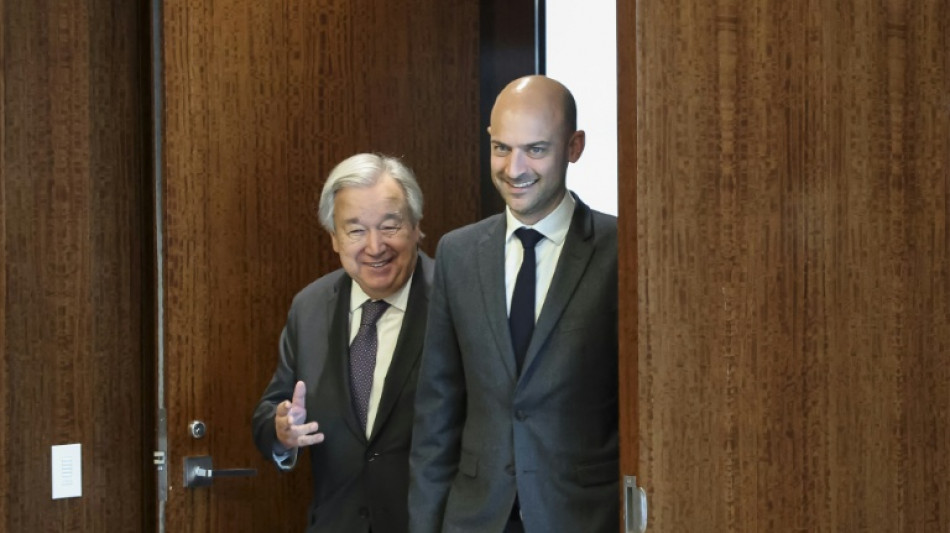
French FM says Iran must make 'major concessions' to end crisis / Photo: © AFP

France said Monday that Iran must be ready to make "major concessions" to end a crisis, as countries piled pressure on Tehran at a UN session on its control of the key Strait of Hormuz.
"There can be no lasting solution to this crisis unless the Iranian regime agrees to major concessions and a radical shift in its stance," Foreign Minister Jean-Noel Barrot told the UN Security Council.
Barrot said that Iran must show a way "to peaceful coexistence within its region and for the Iranian people to be able to build freely their own future," months after the cleric-run state ruthlessly repressed mass protests.
Barrot was attending a session initiated by Bahrain in which dozens of countries made a joint call for Iran to fully reopen the Strait of Hormuz, the gateway to the Gulf and one-fifth of the world's oil.
In response to being attacked, Iran has moved to exert control over the strait, saying it is setting up a toll system, defying warnings from US President Donald Trump who has watched angrily as global oil prices soar.
Mike Waltz, the US ambassador to the United Nations, said that Iran's laying of mines violated international law.
"Indiscriminate planting of mines in international waterways -- that makes Iran international criminal pirates of the straits," Waltz said.
"Tehran admits to these crimes, but it's so incompetent, it also admits to not knowing where the mines are."
- Iran urges 'guarantees' -
Iran's envoy, speaking hours later at the day-long session, noted that Iran, like the United States, was not part of the UN Convention on the Law of the Sea.
The ambassador, Amir Saeid Iravani, said that Iran needed "credible guarantees" that it will not again be attacked before it can ensure "lasting stability and security in the Persian Gulf" and beyond.
"The United States is acting like pirates and terrorists, targeting commercial vessels through coercion and intimidation, terrorizing their crews, unlawfully seizing ships and taking crew members hostage," Iravani said.
"But no one from those who have expressed their concern for international navigation dares to refer to or condemn this terrorist act at today's meeting."
The Trump administration itself often denounces international law and institutions when US actions come under scrutiny.
Trump has also criticized NATO allies for not assisting the United States in the war, on which he did not previously consult them, although he has also insisted the United States does not need help.
But Waltz said at the Security Council: "Now is the time for a coalition of like-minded partners to step up and step in with real capabilities and help."
Barrot, while denouncing Iran's actions, did not shy away from blaming the United States and Israel, saying they started the war "without a clearly defined goal and outside of international law."
"But the Iranian regime bears the overwhelming responsibility for this situation," he said, pointing to its "obstinacy" on its nuclear and ballistic missile programs and "its continual support for terrorist groups."
S.Moreno--LGdM