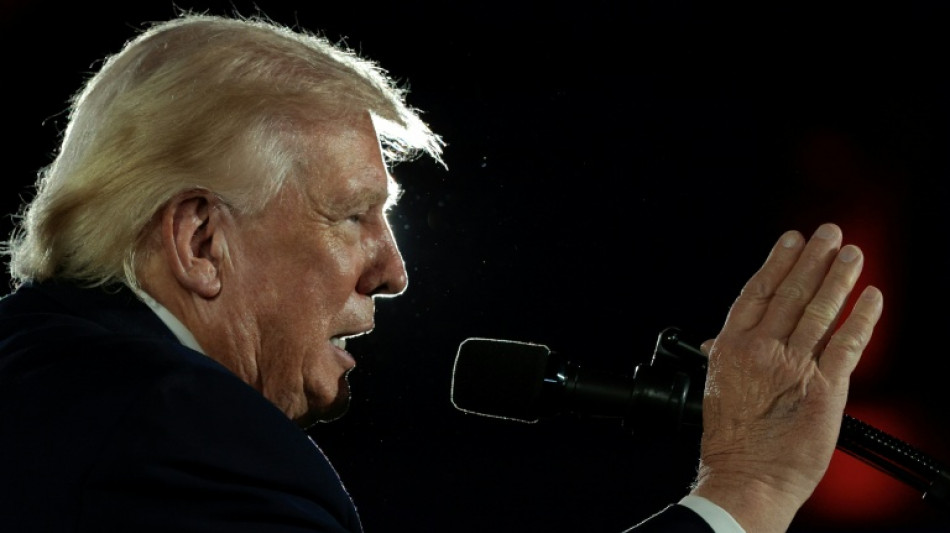
Trump says Iran 'better get serious' in Mideast war talks / Photo: © GETTY IMAGES NORTH AMERICA/AFP

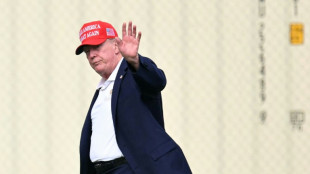
US President Donald Trump warned Iran Thursday to engage in talks to end the Middle East war "before it is too late", after Tehran publicly spurned US overtures to resolve the nearly four-week conflict.
Trump's warning came as Israel said it had killed the commander of the Iranian Revolutionary Guards' navy, calling him "directly responsible" for throttling the vital Strait of Hormuz shipping lane since the war's outbreak.
Hopes for a negotiated end to the US-Israeli war with Iran, which has engulfed much of the region, rose after Washington was said to have put a peace plan to Tehran, only for the Islamic republic to deny the sides were speaking.
But Pakistan's top diplomat confirmed Thursday Islamabad was indeed facilitating "US-Iran indirect talks" by relaying messages -- and that a 15-point American plan was being "deliberated upon" by Tehran.
"They better get serious soon, before it is too late, because once that happens, there is NO TURNING BACK, and it won't be pretty!" Trump warned on social media, saying Iran had been "militarily obliterated, with zero chance of a comeback".
Iran's top diplomat flatly denied Wednesday "negotiations" were engaged with Trump's administration -- but did concede messages were being exchanged through "friendly countries".
"At present, our policy is the continuation of resistance", Foreign Minister Abbas Araghchi said on state TV.
Islamabad has been touted as a go-between given its longstanding ties with both neighbouring Iran and the United States, as well as its network of regional contacts.
Posting on X, Pakistan's Foreign Minister Ishaq Dar said "brotherly countries" Turkey, Egypt and others, were also supporting the process -- while the Gulf Cooperation Council said it wanted to be involved in any talks.
- Conflict spreads east -
Under near-daily bombardment since February 28, Iran was hit by a new wave of Israeli strikes on Thursday -- one of which Israel said had killed the Guards' navy commander, Alireza Tangsiri, and several senior officers.
Defence Minister Israel Katz called Tangsiri "directly responsible for the terrorist operation of mining and blocking the Strait of Hormuz to shipping."
Elsewhere, the Israeli army was conducting what it called "wide-scale" strikes targeting Iranian infrastructure.
Local media reported attacks in the central cities of Isfahan and Shiraz, in Bandar Abbas in the south and Tabriz in the northwest -- but also Mashhad and Birjand, towards the Afghan border in an area largely spared until now.
Iran, in turn, kept up retaliatory attacks on Israel, where medics said six people were lightly wounded by missile attacks.
Fresh violence also flared in the Gulf, with two people killed by debris from an Iranian ballistic missile intercepted near Abu Dhabi, while Saudi Arabia said it shot down at least 18 drones, and Kuwait reported a new missile and drone attack.
Iran has targeted Gulf nations it accuses of serving as launchpads for US strikes, including hits on energy sites and other civilian infrastructure that threaten lasting damage to the global economy.
World Trade Organization chief Ngozi Okonjo-Iweala warned Thursday the global trading system was experiencing the "worst disruptions in the past 80 years."
"We cannot deny the scale of the problems confronting the world today," she told the WTO's ministerial conference.
- Rival conditions -
Crude prices have fallen since last week, abut the divergent messages on talks saw oil prices rise and equities mixed Thursday.
Trump has accused Tehran officials of covering up ongoing talks for fear of becoming assassination targets, following the killing of supreme leader Ali Khamenei.
The White House has declined to identify the "top person" it is speaking with in Iran -- beyond saying it is not the late leader's son and successor, Mojtaba Khamenei, who is believed to be injured and has not been seen since ascending to the role.
"With few exceptions, all of the surviving regime leaders insist on using Iran's strategic advantages to deter the US from attacking Iran at any time in the future," wrote the Soufan Center think tank in a briefing note.
- No Lebanon 'surrender' -
To avenge Khamenei's killing, pro-Iran Hezbollah began firing rockets into Israel on March 2, drawing Lebanon into the war.
As the fighting showed little sign of stopping, Israeli Prime Minister Benjamin Netanyahu said the military had "created a genuine security zone" in southern Lebanon, where an Israeli soldier was killed in the fighting on Thursday.
Hezbollah meanwhile launched a new volley of missiles early Thursday at military sites in central Israel, after its chief Naim Qassem said negotiations with Israel would amount to "surrender".
burs-ec/ser
G.Montoya--LGdM