Indonesia rescues six orangutans from fires in a week / Photo: © Yayasan Inisiasi Alam Rehabilitasi Indonesia (YIARI)/AFP

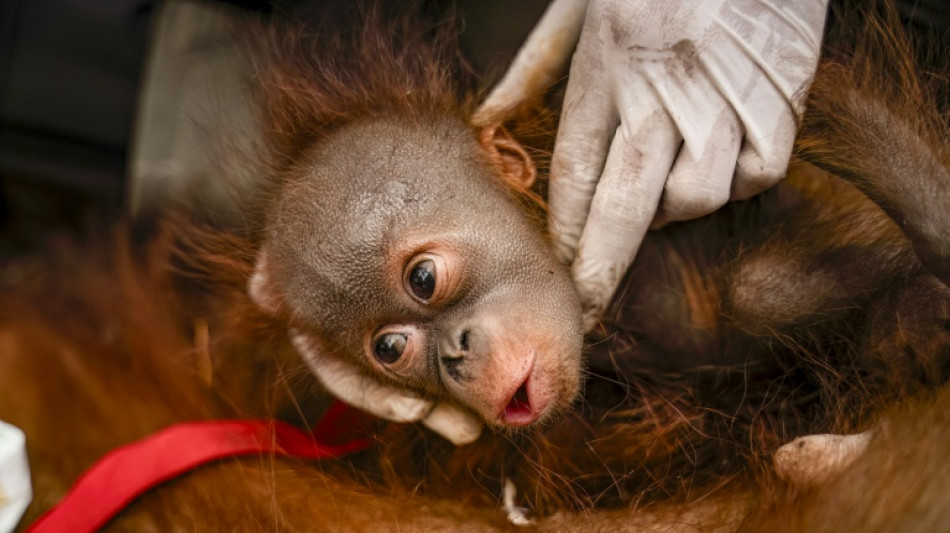
Six orangutans including two nursing infants have been rescued from fires raging on Borneo island in the past week, Indonesian authorities and rescuers said Thursday, bringing the total to 15 in a month.
The apes were saved from plantations in deep rural West Kalimantan province, on the Indonesian part of the island, where they got stuck after fires cut off access to their forest home, according to the forestry ministry and the YIARI wildlife rehabilitation foundation.
A large fire was burning just 200 metres (656 feet) from where the group of critically endangered primates were found, the ministry and YIARI said in a joint statement.
"This situation left the orangutans without a safe route back to their habitat; they could only move from one plantation to another," said the statement.
"In addition to facing the threat of flames and smoke, the orangutans' movement among plantations also has the potential to increase interactions and conflict with (human) communities."
Four orangutans were rescued on Friday, with with the help of residents and plantation workers, followed by another mother-infant pair on Tuesday.
Rescuers had to anaesthetise the animals to minimise stress and the risk of injury. All six were taken to YIARI's rehabilitation centre in the town of Ketapang.
Orangutans are endemic to Borneo and Sumatra islands -- two of the places hardest hit by wildfires that have destroyed vast swathes of land and spewed putrid haze that has spread as far as Malaysia and Singapore.
The Indonesian government said more than 202,000 hectares of land burnt countrywide between January and July. Figures for August have yet to be released.
The Nusantara Atlas project has put the number at closer to 300,000 hectares, and on Thursday gave an estimate of 895,657 hectares, which includes August.
Last week the European Union's Copernicus Atmosphere Monitoring Service said the haze emitted by the fires was the worst for any month of August in 24 years.
Indonesia's dry season typically runs from July to October, made worse this year by a strong episode of the El Nino weather phenomenon.
Wildfires emit dangerous levels of PM2.5 particles so small they can enter deep into the lungs and even the bloodstream, with potentially dire consequences for health.
According to Greenpeace estimates using government data, some 35 million people in Indonesia are exposed to toxic haze.
Some 43,000 firefighters were deployed to combat the blazes, national disaster mitigation agency spokesman Berton Panjaitan told reporters in Jakarta on Thursday.
He said a Japanese navy ship had arrived in West Kalimantan with three helicopters to aid water bombing efforts.
X.Quintero--LGdM