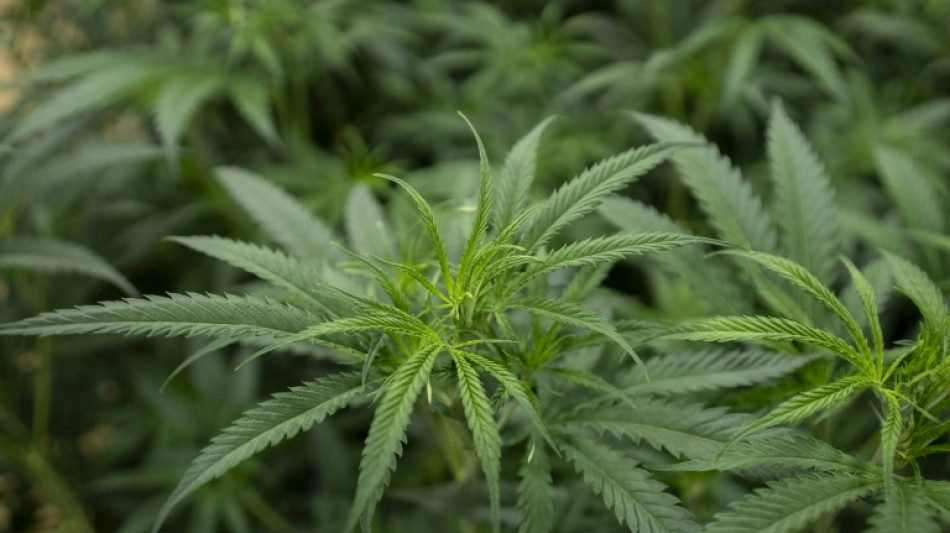
Trump 'considering' push to reclassify marijuana as less dangerous / Photo: © AFP

US President Donald Trump on Monday said his administration could push to loosen federal restrictions on marijuana, reclassifying it as a less dangerous drug.
"We are considering that," Trump told reporters after he was queried whether an executive order on the issue was being discussed.
"A lot of people want to see it, the reclassification, because it leads to tremendous amounts of research that can't be done unless you reclassify, so we are looking at that very strongly."
At the federal level, marijuana is currently classified as a Schedule I substance, in the same league as drugs like heroin and LSD. The government considers these drugs to have high abuse potential without accepted use for medical treatment.
But dozens of US states already have legal medical marijuana programs, and many also have approved its recreational use.
According to a recent Washington Post report, Trump is aiming to push for a reclassification to Schedule III -- substances that are considered to have medical value and less potential for abuse.
That class includes ketamine and anabolic steroids.
Rescheduling is not legalization or decriminalization -- but easing federal restrictions could have ripple effects, including lowering barriers to pursue research, as authorizing clinical studies on Schedule I substances can require many layers of approval.
It could also have major tax implications for companies that legally grow and sell cannabis.
The US president cannot unilaterally reclassify a drug. The Post reported that Trump is expected to sign an executive order directing federal agencies to pursue reclassification.
Joe Biden's administration had previously pursued reclassification, but efforts stalled and were not completed before Trump took office in early 2025.
The US has a patchwork of state-level regulations regarding the commercial distribution, recreational possession and personal cultivation of cannabis.
In small amounts it is already legal for recreational use in 24 US states as well as Washington DC.
S.Moreno--LGdM