Shortages ease in Bolivia as protest roadblocks dismantled / Photo: © AFP

Shortages began to ease in Bolivia on Monday as a state of emergency attempting to end weeks of anti-government protests reopened most roads to traffic.
US-backed conservative President Rodrigo Paz declared a state of emergency on Saturday, which authorizes him to deploy the army and curb certain civil liberties including the right to protest.
The government measure also outlaws roadblocks, which workers and Indigenous communities calling for Paz's resignation had erected across the country to protest Bolivia's worst economic crisis in decades.
The common protest tactic had caused severe food, medical and fuel shortages in several cities.
On Monday, the national road authority said only nine remained -- down from 50 on Sunday and an earlier peak of some 100 roadblocks nationwide.
After weeks of upheaval, ordinary life was resuming in several cities.
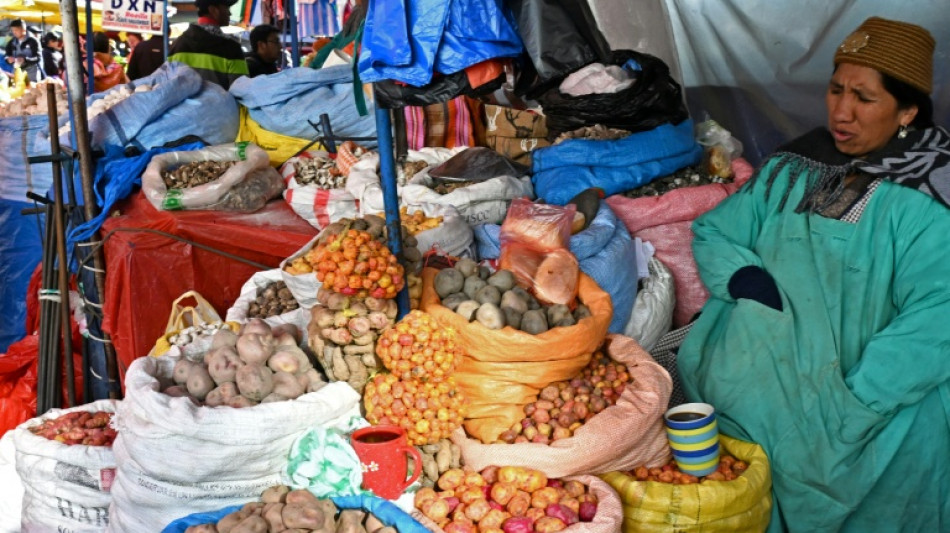
Hundreds of people milled around a popular market in La Paz, stocking up on food products that had only just arrived.
"The situation has returned to normal," 48-year-old shopkeeper Rosa Quispe told AFP.
Before, "there were four blocks of queues, but now it's calmer. We're no longer fighting to buy," said Quispe as she purchased a chicken.
Authorities had encountered resistance to the state of emergency in the central Cochabamba region -- the bastion of former socialist president Evo Morales, who the government has accused of fomenting the unrest.
Security forces were planning on entering Cochabamba's Chapare province, said Interior Minister Marco Antonio Oviedo.
The operation would take place with "peace and calm," the minister added.
Later on Monday, Morales announced the temporary breakdown of the roadblocks in Cochabamba.
"For now this is a temporary pause, this is not a surrender," he said after a meeting with coca-growing leaders.
Paz has been in the eye of the storm since early May when protests against his neoliberal policies snowballed into a movement that paralyzed the Andean nation.
The pro-business leader also accuses Morales, without evidence, of benefitting financially from drug trafficking.
Morales, the country's first Indigenous president, is in hiding in his coca-growing stronghold of Chapare to escape charges of trafficking a minor, which he denies.
He recently told AFP that Bolivians were rebelling against a conservative government that is "utterly submissive" to the United States.
G.Montoya--LGdM