US-Israeli strikes pummel Tehran, as Trump says 'too late' for talks / Photo: © AFP

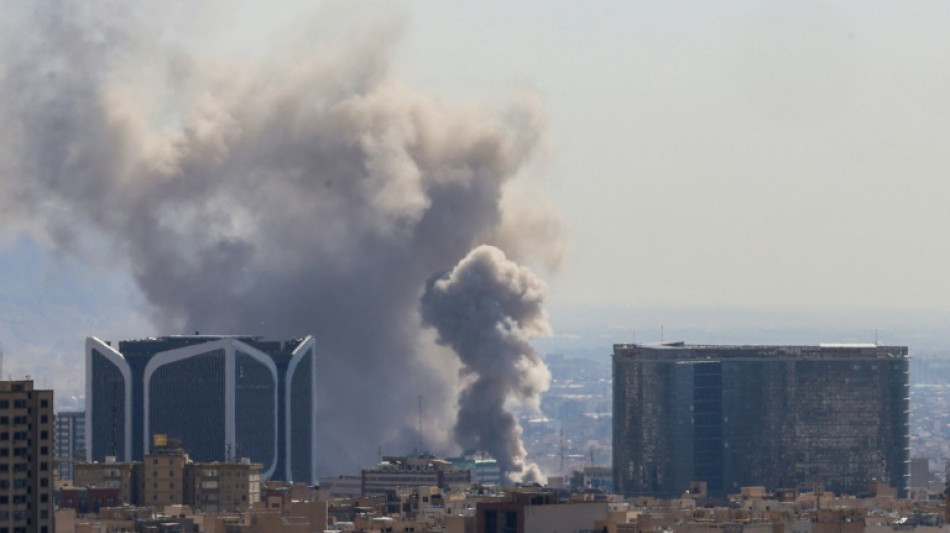
US and Israeli strikes pummelled targets across Tehran on Tuesday, as President Donald Trump warned it was "too late" for Iran to seek talks to escape a war now in its fourth day.
Drones and missiles crashed into oil facilities and US embassies in the Gulf as the Islamic republic retaliated, and Israel pushed troops deeper into Lebanon to battle the Tehran-backed militia Hezbollah after it entered the fray.
Israel announced a "large-scale wave" of strikes targeting Iran's capital Tuesday, with local media showing columns of smoke rising over the centre of town -- home to many government buildings -- and reporting an attack on one of the city's two airports.
"Their air defence, air force, navy, and leadership is gone. They want to talk. I said: 'Too late!'," Trump posted on social media, two days after he said he was open to talks and four days after US and Israeli strikes killed supreme leader Ayatollah Ali Khamenei.
Iran’s ambassador to the UN in Geneva denied that his country had approached the US for talks.
According to Iranian media, US and Israeli strikes targeted a building on Tuesday in Qom belonging to the committee that is to elect a new supreme leader. The Tasnim news agency reported that strikes had already targeted the body's main headquarters in Tehran the day before.
Iran's foreign ministry spokesman said the UN Security Council "has a duty" to act to stop the war, even as its military has remained publicly defiant in the face of the campaign.
A spokesman for the Revolutionary Guards warned "the gates of hell will open more and more" upon the US and Israel.
A Guards general, Ebrahim Jabbari, said that if Iran's foes "hit our main centres, we will hit all economic centres in the region".
The US embassy in Riyadh -- which was damaged and briefly caught fire overnight in an Iranian drone strike -- on Tuesday warned of an imminent attack in the eastern Saudi city of Dhahran, home to much of the kingdom's oil and gas installations along the Gulf coast.
Economic targets came under fire elsewhere in the Gulf as Iran continued to launch volleys of retaliatory drones and missiles at its neighbours.
Qatar said it had downed missiles targeting Hamad International Airport in Doha, while Oman reported several drones attacking the port of Duqm, and in the UAE falling debris from an intercepted drone caused a fire at an oil storage and trading zone, authorities said.
- Ghost town -
In Tehran, residents who have not fled remained shut away in their homes for fear of the US-Israeli bombardment.
The Iranian capital is normally home to around 10 million people, but in recent days "there are so few people that you'd think no one ever lived here", said Samireh, a 33-year-old nurse.
Authorities had previously urged people to leave the city, and police officers, armed security forces and armoured vehicles have been stationed at main junctions, carrying out random checks on vehicles.
In the more upmarket north of Tehran, the meowing of cats and birdsong replace the usual din of traffic jams.
Trendy cafes and restaurants, typically lively in the evening, were closed.
Streets were largely deserted and most vehicles still on the road were supplying grocers and small local shops that were still open.
- Diplomatic, economic concerns -
Israel's Foreign Minister Gideon Saar urged foreign capitals on Tuesday to cut all ties with Tehran "following the Iranian regime's attacks on all its neighbours and the massacre of its own people".
China's Foreign Minister Wang Yi, according to the official Xinhua news agency, warned Saar in a call that Beijing opposes the strikes, saying the use of force "will only bring new problems and severe after-effects".
The war has already sent shockwaves through world markets, with energy prices soaring and share prices falling.
Asian giant India added its concern to China's.
"Our trade and energy supply chains also traverse this geography. Any major disruption has serious consequences for the Indian economy," foreign ministry spokesman Randhir Jaiswal said.
After already halting LNG production, Qatar's state-run QatarEnergy said it would also stop some downstream production of substances including urea, polymers, methanol and aluminium after Iran attacked two gas processing plants.
The announcement prompted an immediate two percent rise in the price of aluminium on the London Metal Exchange.
United Nations rights chief Volker Turk said he was "deeply shocked" by the war's toll on civilians, and the UN nuclear watchdog said Iran's Natanz enrichment plant appeared in satellite imagery to have suffered "recent damage".
- Lebanon front -
Israel said it was seizing new forward positions inside southern Lebanon, after Hezbollah fired missiles in support of its backer Iran, provoking a furious Israeli bombardment.
Defence Minister Israel Katz said Israeli forces had been authorised to "take control of additional strategic positions in Lebanon in order to prevent attacks on Israeli border communities".
A Lebanese army source said Israeli forces had advanced from around Kfar Kila, in an apparent attempt "to establish a broad security belt in south Lebanon".
According to a Lebanese military source, the country's army pulled troops posted near the southern border back to their bases. Hezbollah said it had launched strikes targeting three Israeli bases.
Lebanese authorities said Tuesday that more than 58,000 people have been driven from their homes -- double the figure reported the previous day.
The United States embassy in Beirut said Tuesday it will remain closed until further notice.
burs/smw/rh
L.Navarro--LGdM