Nottingham Exhibition Replaces Gym Weights With Jesmonite Sculpture

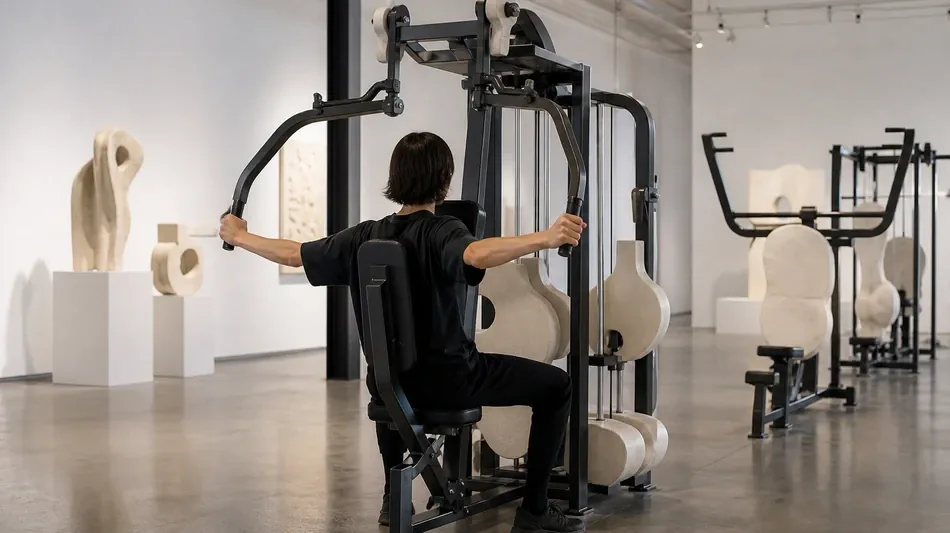
Physical Culture invites audiences into fully operational metal fitness machines with Jesmonite sculptures replacing conventional weights
Imagine replacing dumbbells and conventional weights for pieces of sculpture during a gym session. That is what an exhibition, currently taking place at Nottingham Contemporary, in Weekday Cross, allows visitors to do. Physical Culture by Augustus Serapinas invites audiences into fully operational metal fitness machines with Jesmonite sculptures replacing conventional weights.
It is Augustus Serapinas’ first institutional solo exhibition in England and aims to highlight the crossover between the repetitive skills needed to train in the gym. Augustus stated: “Bodies are not only shaped by exercise but also by the way we learn to look at them. Beauty has never been a fixed ideal – it shifts with time, culture and context.
“Today's gyms serve as temples of the body where ideals and disciple are pursued, repeated and displayed. In these spaces, training is more than exercise – it becomes a way of enacting collective beliefs.” The exhibit features newly commissioned elements, which were made in collaboration with students and staff at Nottingham Trent University and local fitness instructors. One of the new elements can be seen within the 'hurdles' on the edge of the exhibit rooms, which are replicas of Nottingham’s Waverley Heads featuring notable artists from the 16th to 18th centuries, including Raphael and William Hogarth.
July Styles, 37, one of the leaders of one to one training, which is also on offer, stated: “I was contacted to be a part of this event and having previously run an art gallery and now having a fitness business, I understood the natural overlap between art and fitness and from the moment they mentioned the concept I knew wanted to be involved." July is a fitness and trauma-informed women’s coaching specialist and also a certified strength and conditioning coach. She stated: “It has been a great thing to be a part of and has made me see fitness in a different light plus getting to work out with equipment like this has been fantastic. "From the beginning, I knew it was essential that it was inclusive and everyone regardless of their ability could get involved, this was where the idea of providing one to-one instructors originated.
“Everyone loved the idea because the same way that art is for everyone, so is fitness. So this was vital for this exhibition to continue with the overlapping themes of art and the gym. “The main difference between training people here compared to a normal gym is that it isn’t as adjustable to each person such as the cables being one length, and we can’t adjust the weight in any way.
“However, everyone who has attended has been able to use the equipment, so it hasn’t limited access, and there are still some similarities to a normal gym as it still gives you the chance to complete a good number of reps." The idea for Physical Culture was first developed in 2012, inspired by Serapinas' experience as a student at the National M.K. Ciurlionis School of Art in Vilnius, in Lithuania, where art education follows traditions of western art history. This exhibition, which runs until September 13, has attracted visitors from across the country who have travelled specifically to see it and booked the sessions in advance.
Isabelle Bentley, 26, travelled from London for the exhibition. She stated: “When I saw this on social media I was intrigued and convinced my boyfriend that we had to come and visit. "I have been really impressed by how welcoming it was and how much more affective it is in real life.
“A lot of things did surprise me like how heavy the sculptures are, but the thing that made it harder than a normal gym is that the weight is uneven - this meant sometimes you dipped more one side and that made it tough." The Nottingham Contemporary has welcomed around two million people since its opening in 2009 and held more than 50 exhibitions, and is free to access.
X.Quintero--LGdM