Brazil megacity Sao Paulo struck by fresh water crisis / Photo: © AFP

Brazil's megalopolis Sao Paulo faces a new water crisis as the lowest rainfall in a decade has turned its main reservoir into mere streams surrounded by cracked earth, prompting water rationing.
Home to 22 million people, it is the most populous urban area in Latin America. Sao Paulo is often ranked alongside cities like Mexico City, Cape Town and Chennai that are extremely vulnerable to water shortages.
Sao Paulo has experienced three consecutive years of below average rainfall, according to INMET, Brazil's meteorological agency.
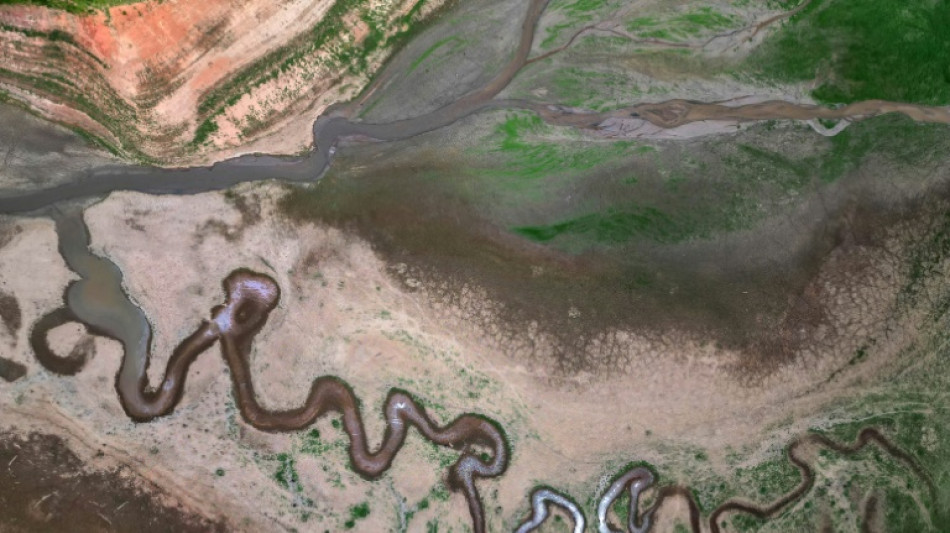
The nation's water and sanitation agency, ANA, reports that Sao Paulo's main reservoir, which supplies nine million people, is operating at less than 18 percent of its capacity.
This is approaching levels seen during a severe drought in 2014 when Sao Paulo's reservoirs faced collapse amid one of the worst droughts in decades to hit the region.
Much of the reservoir is dry, with only meager streams of water crisscrossing its surface and parched earth cracking on the sides, an AFP reporter witnessed.
"From August onward the water kept dropping and dropping. It's very frightening, every day we see it shrinking," said Daniel Bacci, owner of an inn next to the Jaguari–Jacarei reservoir told AFP.
"There was a little rain last week, but it wasn't enough to raise the water level."
In October, the Sao Paulo state government announced new rationing measures that could see water pressure in pipelines reduced for up to 16 hours a day, compared to 12 currently.
If water levels near zero, rolling shutdowns of water to different regions will be implemented.
In recent years, scientists have warned of hotspots around the globe where extreme drought can trigger shortages of drinking water -- often in densely populated areas with poor management of the water supply system.
South Africa's Cape Town faced the threat of a "Day Zero Drought," where the taps nearly ran dry for millions of people in 2018. India's Chennai faced a similar crisis the following year.
In 2023, residents of Uruguay's capital of Montevideo turned en masse to bottled water as reservoirs dropped so low that authorities had to mix brackish river water into the drinking supply and up the allowed levels of sodium and chloride.
Brazil is home to 12 percent of the entire planet's freshwater, but much of this lies in the Amazon and not major population centers.
Pollution, rapid urban growth and leaky infrastructure have also exacerbated the problem.
H.Jimenez--LGdM